

How Colorado Housing Laws Affect Mountain Homeowners
CAR's Brian Tanner breaks down the 2026 legislative session — housing shortages, insurance, property rights, and what's next.
Ashley Kappel and Jessica Chariton
6/25/20264 min read
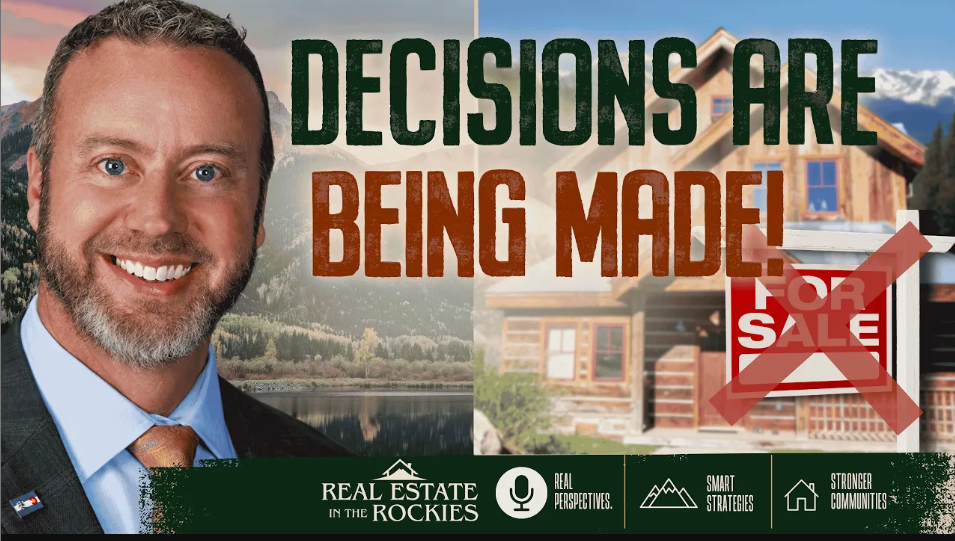
Behind the Bills: How Colorado Housing Laws Get Made
Colorado lawmakers introduced hundreds of bills during the 2026 legislative session , and dozens of them directly affect housing, property rights, insurance, and real estate transactions across the state, including in mountain communities like Chaffee County.
On this episode of Real Estate in the Rockies, Ashley Kappel and Jessica Chariton sit down with Brian Tanner, Vice President of Public Policy for the Colorado Association of Realtors (CAR), to unpack what actually happened at the Capitol this year , and why insurance, not affordability alone, may be the issue that matters most going forward.
👉 Listen to Episode 8 here | 🎧 Also on Spotify / Apple Podcasts / YouTube
Quick Answer: What Was the Biggest Housing Story of Colorado's 2026 Legislative Session?
According to Brian Tanner, 2026 was a good session for property rights , CAR says it helped defeat several bills it considered harmful to housing providers while supporting others aimed at improving housing supply. But when asked what concerns him most long-term, Tanner didn't point to affordability or legislation at all: he pointed to insurance. Rising premiums, shrinking coverage, and wildfire risk are, in his words, "the issue that keeps me up at night" , because an uninsurable property doesn't just affect one homeowner, it can affect an entire neighborhood or zip code.
Why Lobbyists Matter More Than People Assume
Tanner is direct about something most people misunderstand: lobbyists aren't just influence-peddlers, they're often the only people in the room who remember what happened the last time a similar bill was tried. With term limits cycling new lawmakers through the Capitol regularly, Tanner describes his role as helping translate real-world housing and property experience into policy that elected officials , who often have limited firsthand experience in real estate , can act on. As he puts it, legislators' knowledge tends to run "an inch deep and a mile wide," and part of his job is filling in the depth.
Colorado Is Short More Than 100,000 Homes
One of the clearest data points from the episode: Colorado's state demographer estimates the state is short roughly 106,000 housing units , and that shortage isn't confined to the Denver metro area, it spans the entire state, including mountain communities facing their own supply constraints from land costs and construction expenses.
Tanner frames CAR's approach around a simple filter: policies that spur housing development at multiple price points help close that gap, while policies that discourage development or shrink the rental housing stock work against it , even when they're well-intentioned.
The Landlord-Tenant Bill Debate
Every session, Tanner says, brings a wave of bills aimed at expanding tenant protections , a trend he connects to Colorado's Democratic legislative majorities and active tenant advocacy groups. CAR's position, as Tanner frames it, isn't opposition to tenant protection as a goal, but concern about unintended consequences: he argues some of these bills can push property owners to sell rental units rather than keep renting them, shrinking the very rental stock the policies are meant to protect.
It's worth noting this is CAR's advocacy position as an organization representing real estate professionals and property owners , tenant advocacy groups and housing policy researchers frequently argue the opposite, that stronger tenant protections are necessary precisely because market forces alone haven't kept rents affordable. Both sides of this debate show up in every Colorado legislative session.
Why Insurance May Be the Bigger Crisis
If there's one moment in this episode worth sitting with, it's Tanner's answer when asked to rank his top concerns among AI regulation, wildfire policy, and insurance: "hands down, insurance."
His reasoning: when a property becomes uninsurable, the effects ripple outward , not just to that homeowner, but to the whole neighborhood, community, and zip code. In mountain communities specifically, Tanner says insurance costs have already doubled or tripled in some cases, and for condo owners and HOAs, that can translate into special assessments worth thousands of dollars , a serious burden for residents on fixed incomes.
Tanner points to Colorado's FAIR Plan (the state's insurer of last resort) and growing wildfire mitigation requirements as both a partial solution and a cost driver in their own right. His core ask: Colorado needs more private insurers competing in the state, not fewer, to keep both availability and pricing in check.
Why Local Elections Matter More Than People Think
Tanner's closing advice is squarely about civic engagement: get to know legislative candidates before they're elected, not after. His reasoning is practical , once candidates reach Denver for the legislative session, they operate inside what he calls a "bubble" for months at a time, making it much harder to build a relationship or make your case. He recommends the June-through-December window, when candidates are actively campaigning in their own communities, as the best time to start those conversations.
He's also candid about how the political math works regardless of policy merit: "politics trumps policy every single time" , meaning even a well-designed policy can stall if it doesn't have the votes behind it.
Frequently Asked Questions
How many housing units is Colorado short, according to the state demographer? Approximately 106,000 units statewide , not limited to the Denver metro area, according to Brian Tanner of the Colorado Association of Realtors.
What does Brian Tanner see as the biggest long-term threat to Colorado housing? Insurance availability and cost, particularly in wildfire-prone mountain communities, where he says premiums have doubled or tripled in some cases.
What is Colorado's FAIR Plan? Colorado's insurer of last resort, designed to provide coverage for properties that private insurers won't cover , discussed in the episode as part of the state's response to its insurance availability crisis.
When is the best time to meet a legislative candidate, according to Brian Tanner? June through December, while candidates are actively campaigning in their communities , before they're elected and harder to access once in office.
🎧 Hear the full conversation with Brian Tanner on this episode of Real Estate in the Rockies , housing policy, insurance, property rights, and what's coming in Colorado's next legislative session.
👉 [Subscribe to Real Estate in the Rockies] so you never miss an episode.
Learn more: coloradorealtors.com
Contact
Questions? Reach out anytime.
CONTACT
Collegiate Peaks Law & Mediation (719) 406-4111
Heart of the Rockies Homes (719) 334-8578
© 2026. All rights reserved.