
The Truth About Growth in Colorado Mountain Towns
Top Colorado Realtor Treasure Davis on growth, affordability, and why planning (not tourists) shapes mountain town housing.
Ashley Kappel and Jessica Chariton
5/28/20265 min read
The Truth About Growth in Colorado Mountain Towns
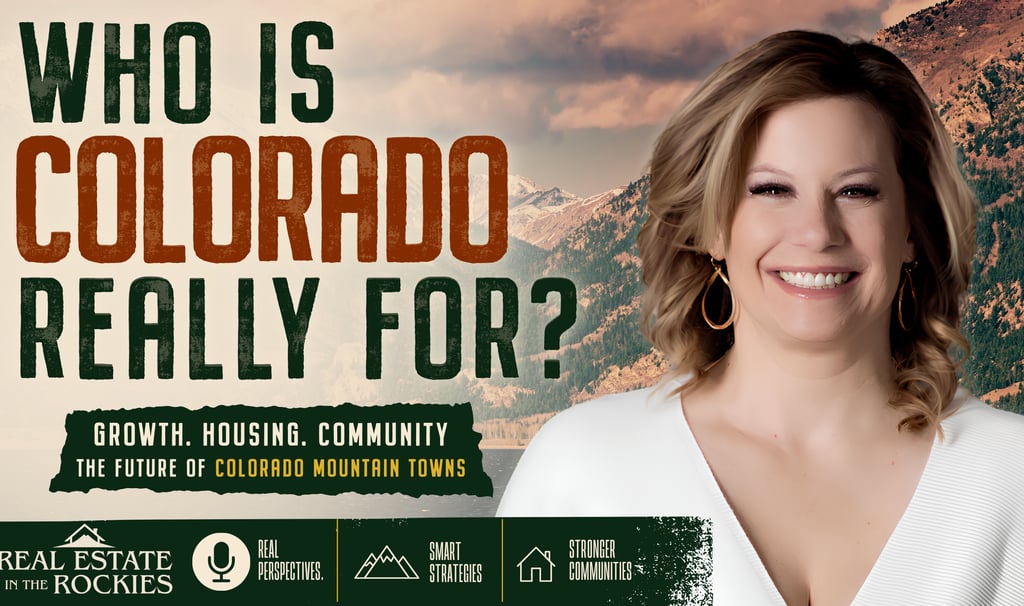
Colorado mountain towns are changing fast, and the conversations around growth, housing, and who "counts" as local are getting more complicated, not less.
On this episode of Real Estate in the Rockies, Ashley Kappel and Jessica Chariton sit down with Treasure Davis, ranked in the top 1% of Realtors nationally, founder of the Treasure Davis Team at eXp Realty (Zillow's #1 team in Colorado Springs), and someone whose husband's family homesteaded in Salida generations ago, for a candid conversation about what's really driving tension in growing mountain communities.
👉 Listen to Episode 6 here | 🎧 Also on Spotify / Apple Podcasts / YouTube
Quick Answer: What's Really Driving Growth Tension in Colorado Mountain Towns?
According to Treasure Davis, growth itself isn't the problem, the absence of long-term, transparent planning is. As she puts it, "growth is good in the context of proper planning without the agendas behind it." Without a shared multi-year plan that residents understand and can see themselves in, new development feels like an imposition rather than something the community chose together, which fuels NIMBY ("not in my backyard") resistance and turns every project into a fight.
Why Planning (or the Lack of It) Shapes Everything
Davis draws a direct comparison to Irvine, California, a city built on a deliberate grid system with a clear underlying logic. She argues many Colorado mountain towns lack that same forward-thinking structure, decisions get made reactively ("we sold this land, let's just build this") rather than tying back to a documented one-year, three-year, and five-year community vision.
Her point: when a city or county does the work of setting a shared plan in advance, new growth doesn't need to be a fight. Residents can see how a project fits the bigger picture instead of experiencing it as one board member's personal agenda.
The "Who's Really Local" Debate
Davis pushed back directly on the idea that tourists, second-home buyers, or newcomers are what's making mountain towns unaffordable for longtime residents. She shared a personal example: a Salida shop owner who expressed dislike for tourists, despite tourism being the very foundation that built many local family histories, including her own family's path to eventually living in Salida full-time.
She raises a genuinely tricky question tied to this: how far back does someone's family need to go before they're considered "from" a place? Her husband's family goes back four generations in Salida, a fact she says complicates any simple insider/outsider framing of who gets a say in local growth decisions.
What the Data Actually Shows About Colorado's Market
Davis pointed to a real-time example from her own market: a recent realtor.com report naming Denver the fastest-declining market in the country. She described a ripple pattern where pricing trends tend to move from Denver into Colorado Springs, then Pueblo, then into smaller mountain markets, meaning shifts in the big Front Range markets eventually show up locally.
Her own brokerage's leadership has called the last two years the hardest real estate market in 50 years, following the sharp pullback from pandemic-era buying intensity. Davis described the current shift as a slow move toward a more balanced market, neither a strict buyer's nor seller's market, though conditions vary widely, with some listings drawing multiple offers in a day and others sitting for months.
Is It Really Second Homes and Tourists Driving Unaffordability?
This is one of the more pointed positions in the conversation, and it's worth noting it's Davis's own view rather than a settled consensus. She argues that broader social media narratives, messaging that discourages traditional work and homeownership, play a bigger role in perceived unaffordability than second-home buyers or tourism specifically, and that this pattern isn't unique to Colorado but shows up nationally.
She also points to relative cost-of-living comparisons (like gas prices in California versus Colorado) to argue that "expensive" is often a matter of comparison rather than an absolute. This is a genuinely contested point in mountain town housing debates, and other guests on this podcast, including developer Walt Harder and Places to Age's Marilyn Bouldin and Andi Bruno, have pointed more directly to land costs, regulation, and second-home demand as bigger factors. It's a debate worth hearing multiple sides of.
The Housing and Mental Health Connection
One of the more personal moments in the conversation came when Davis connected housing instability to mental health. She described a friend, a successful professional, who ultimately chose to leave her home due to mental health challenges and a lack of adequate local resources to support her, making the point that housing struggles aren't always explained by affordability alone.
Davis was careful to note she isn't suggesting that not owning a home implies a mental health struggle, many people simply prefer renting or a different lifestyle at different seasons of life. But she does think the connection between mental health resources and housing stability is underexamined compared to how much attention affordability gets on its own.
Why Customer Service and Collaboration Matter More Than People Think
Davis was direct about what she believes actually drives success in real estate, and it's not what most agents assume. Her philosophy: "it was never about you anyway." She pushes back on real estate professionals treating buyer or seller unresponsiveness as personal, arguing instead that persistence and follow-through (not taking a missed callback personally) is what separates agents who succeed from those who don't.
She's also blunt that customer service across many industries, real estate included, is "becoming the exception, not the rule", and that collaboration between agents, rather than guarding information competitively, ultimately produces better outcomes for clients and the profession as a whole.
What Realtors Owe Their Communities
Davis has served on multiple community boards, including her local Housing Authority, an experience she describes as politically charged but clarifying. Her takeaway: everyone, regardless of scale, has some responsibility to give back to their community, whether that's through board service or something as small as a single contribution that compounds when many people participate.
Frequently Asked Questions
What does Treasure Davis say is really driving growth tension in Colorado mountain towns? She argues it's the absence of clear, long-term community planning, not growth itself, that turns development into conflict, since residents can't see how new projects fit into a shared future vision.
Is Denver's housing market really declining? According to a realtor.com report cited in the episode, Denver was named the fastest-declining housing market in the country, with effects that typically ripple into Colorado Springs, Pueblo, and smaller mountain markets over time.
Are tourists and second-home buyers the main cause of unaffordability in Colorado mountain towns? Treasure Davis argues they aren't the primary driver, pointing instead to broader economic messaging and cost-of-living comparisons, though this is a contested point, and other guests on this podcast have emphasized land costs and regulation as bigger factors.
How are mental health and housing stability connected? Davis shared that housing instability isn't always about affordability, sometimes a lack of adequate mental health resources plays a significant role, even for financially successful individuals.
🎧 Hear the full conversation with Treasure Davis on this episode of Real Estate in the Rockies, growth, affordability, mental health, and what it really takes to build thriving Colorado communities.
👉 Subscribe to Real Estate in the Rockies so you never miss an episode.
Connect with Treasure Davis: Instagram @treasuredavisrealtor | treasuredavis.com
Contact
Questions? Reach out anytime.
CONTACT
Collegiate Peaks Law & Mediation (719) 406-4111
Heart of the Rockies Homes (719) 334-8578
© 2026. All rights reserved.