
Can Affordable Housing Work in Colorado Mountain Towns?
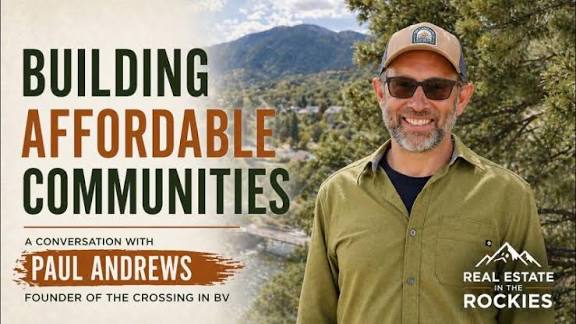
Affordable housing in Colorado mountain towns like Buena Vista is one of the biggest challenges communities face today. In this episode of Real Estate in the Rockies, we break down what it actually takes to build affordable housing and whether it can truly work. Ashley and Jessica sit down with Paul Andrews, developer of The Crossing, a 50% affordable housing community in Buena Vista, to discuss funding, infrastructure, deed restrictions, and the real cost behind these projects. Paul brings decades of experience in real estate finance and development, including leadership roles at Vail Resorts and EverWest Real Estate Investors, where he helped grow a $5 billion real estate platform.
Ashley Kappel and Jessica Chariton
3 min read
Affordable housing is one of the most urgent challenges facing Colorado's mountain communities right now. In places like Buena Vista, rising home prices, limited inventory, and growing demand are pushing local workers and families further from the towns they work in.
So the question a lot of communities are asking: is affordable housing even possible in these markets anymore?
The Crossing, a development in Buena Vista, offers a real-world case study — and on this episode of the Real Estate in the Rockies podcast, we break down exactly how it's being done.
👉 Listen to Episode #2 here 🎧 Also available on Spotify / Apple Podcasts
Quick Answer: Is Affordable Housing Possible in Mountain Towns?
Yes, but it requires a mix of public funding, deed restrictions, and smaller-footprint design working together. Traditional market-rate financing alone can't make the math work in high-demand mountain markets. Projects like The Crossing combine grants, low-interest loans, and creative design choices to hit lower price points, while deed restrictions keep those homes affordable for future buyers, not just the first one.
The Reality Behind Affordable Housing
Affordable housing isn't just about building cheaper homes, it requires completely rethinking how a project is financed, designed, and executed.
One of the biggest barriers is infrastructure. Before a single home can go up, developers have to fund roads, utilities, and water systems. Those costs alone can reach into the millions, which makes affordability nearly impossible to hit without outside support.
Why Funding Is Critical to Affordable Housing Projects
Projects like The Crossing lean heavily on funding sources outside of traditional financing, grants, low-interest loans, and state-backed programs that help offset development costs and make lower price points achievable.
Timing matters too. Access to these funding sources isn't always consistent, and without them, many affordable housing projects in mountain towns simply wouldn't move forward.
What Are Deed Restrictions, and Why Do They Matter?
Deed restrictions are one of the key tools used to protect long-term affordability. They cap how much a home can resell for, which keeps it accessible to the next buyer instead of flipping to market rate.
It's a tradeoff, homeowners give up some resale profit, but in markets like Buena Vista, it's often the only thing standing between an affordable home today and a market-rate home in five years.
Designing Homes for Affordability
Affordability isn't only a financing problem, it's a design problem too.
Smaller homes, shared infrastructure, and alternative layouts can meaningfully cut costs. At The Crossing, that's meant smaller square footage, carports instead of garages, and housing types like condos and townhomes instead of single-family builds.
Those design decisions are what make certain price points possible at all.
The Tradeoffs and Risks of Building Affordable Housing
None of this happens without risk. Developers navigate complicated approval processes, layered funding requirements, and community expectations, often while putting personal capital on the line.
In the case of The Crossing, the developer took on that financial risk directly to get the project built.
Looking Ahead for Colorado's Mountain Communities
The Crossing is one model for solving the housing crisis in mountain towns, not necessarily one that can be copied everywhere, but proof of what's possible with the right mix of experience, funding, and vision.
As more Colorado mountain communities face the same pressure, expect to see more projects borrow from this playbook.
Frequently Asked Questions
What is deed-restricted housing? Deed-restricted housing limits how much a home can be resold for in the future, keeping it affordable for buyers long after the original sale.
Why is affordable housing so hard to build in Colorado mountain towns? High land and infrastructure costs, combined with strong market-rate demand, make it difficult for affordable projects to pencil out without outside funding support.
How is affordable housing funded in mountain communities like Buena Vista? Through a mix of grants, low-interest loans, and state-backed housing programs that offset development costs traditional financing can't cover alone.
What design choices make affordable housing possible? Smaller square footage, shared infrastructure, carports instead of garages, and higher-density housing types like condos and townhomes.
🎧 Want the full story? Listen to this episode of Real Estate in the Rockies for the full conversation on how The Crossing came together, funding, risk, and all.
Guest Links:
http://www.thecrossingbv.com
Instagram: @thecrossingbv
Facebook: The Crossing BV
LinkedIn: The Crossing BV
Connect with Jessica: https://jessicachariton.homesmartpreferredrealty.com/
Connect with Ashley: https://www.collegiatepeakslawandmediation.com/
👉 Subscribe to Real Estate in the Rockies so you don't miss the next episode.
Contact
Questions? Reach out anytime.
CONTACT
Collegiate Peaks Law & Mediation (719) 406-4111
Heart of the Rockies Homes (719) 334-8578
© 2026. All rights reserved.